


By Ndleleni Boyilane
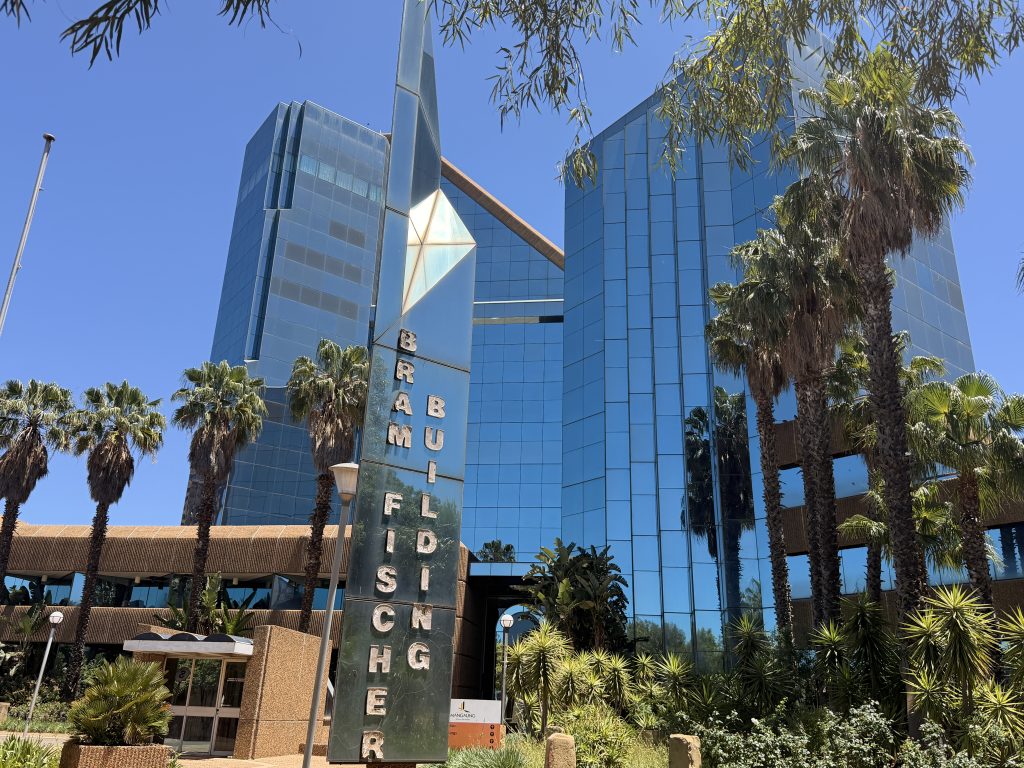
Bloemfontein – The African National Congress (ANC) has lost its outright majority in the Mangaung Metropolitan Municipality, marking an important turning point in the political history of the Free State capital.
WATCH
Although the ANC remains the largest party, it has secured 35 seats against the Democratic Alliance’s 34 in the 101-seat council. The ANC is therefore ahead by just one seat, but it is no longer in a position to govern Mangaung alone.
This is more than an electoral setback. It presents an opportunity to reflect on the relationship between political leadership, institutional capacity, service delivery and the changing expectations of citizens.
Perhaps the most important question is not why the ANC lost its majority, but why it failed to reverse the circumstances that made such an outcome possible.
The 2021 local government elections gave the ANC another opportunity to address Mangaung’s governance and administrative challenges. The party entered that period with a new political leadership that understood the municipality’s history, institutional weaknesses and the circumstances that had brought it to the brink of administrative and financial collapse.
This was not a municipality whose problems suddenly emerged during the latest electoral cycle. Mangaung had already been placed under provincial intervention in December 2019, followed by national intervention in April 2022.
Financial recovery plans, political engagements, administrative interventions and various support mechanisms were introduced.
The expectation was that the municipality would use this period to rebuild its institutional capacity, restore financial discipline, stabilise its administration and improve service delivery.
Yet, five years later, the municipality remains in serious difficulty.
The Auditor-General’s findings and parliamentary oversight engagements have repeatedly highlighted weaknesses in financial management, project implementation, contract management and institutional stability.
In May 2026, Parliament reported that Mangaung had spent 113% of its budget while achieving only 50% of its service delivery targets. Furthermore, only 58% of the activities in its financial recovery plan had been implemented.
These figures should concern everyone, irrespective of political affiliation. They suggest that the municipality’s challenges were not simply a consequence of inadequate financial resources. They also reflected weaknesses in the ability to translate available resources into measurable public value.
The political leadership had five years in which to demonstrate that a turnaround was possible. The election results now provide an opportunity to examine why that turnaround did not materialise.
The institutional capacity crisis: A municipality cannot function without people
One of the most alarming features of Mangaung’s institutional condition is its vacancy rate.
According to the Auditor-General’s 2023/24 local government audit report, Mangaung had an overall vacancy rate of approximately 61%, the highest among South Africa’s metropolitan municipalities at the time.
This means that more than six out of every ten approved positions were vacant.
The implications are substantial. A municipality requires engineers to maintain infrastructure, technicians to attend to electricity and water networks, planners to coordinate development, finance professionals to manage public resources, procurement specialists to administer contracts and project managers to ensure that infrastructure projects are completed.
When these positions remain vacant, the consequences are felt directly by communities. Water interruptions take longer to resolve. Roads deteriorate without adequate maintenance. Infrastructure projects experience delays. Financial controls weaken, while existing employees become overburdened with responsibilities beyond their capacity.
A vacancy rate of this magnitude is therefore not merely an internal human resources problem. It is a service delivery problem.
It also raises important questions about recruitment practices, organisational design, financial sustainability and the municipality’s ability to attract and retain scarce technical skills.
Political leadership must understand that appointing people to political positions is not the same as building a capable municipality. The latter requires an appropriately skilled, adequately staffed and professionally managed administration.
The new council must treat institutional capacity as one of its most urgent priorities.
The responsibility of national and provincial government
It would, however, be intellectually dishonest to examine Mangaung’s predicament exclusively through the conduct of its municipal political leadership. The crisis also raises questions about the effectiveness of intergovernmental relations and the constitutional responsibility of national and provincial government to support municipalities in distress.
The Free State Provincial Government and National Treasury cannot simply be spectators when municipalities experience prolonged institutional and financial difficulties.
The provincial government placed Mangaung under administration in 2019, but the intervention did not produce the required turnaround. National government subsequently assumed responsibility through a Section 139(7) intervention in 2022.
National Treasury also developed a new Financial Recovery Plan, approved in 2023. However, the subsequent implementation record raises questions about the effectiveness of the support provided and the ability of the different spheres of government to coordinate their interventions.
It is important to distinguish between the provision of support and the achievement of results. National Treasury and provincial government did provide technical assistance, oversight and intervention mechanisms. The problem is that these mechanisms did not translate into a sufficiently effective recovery.
The Auditor-General’s 2023/24 report, for example, recorded that National Treasury withheld substantial infrastructure grant funding from municipalities because of underspending and poor project implementation. Mangaung was among the municipalities affected.
This creates a difficult policy dilemma: municipalities need financial and technical support to improve their capacity, but they also need to demonstrate that they can use public resources responsibly.
The solution cannot be to withdraw support indefinitely, nor can it be to continue transferring resources without addressing the institutional weaknesses that prevent effective expenditure.
What is required is a more coordinated, sustained and accountable intervention model, combining technical expertise, institutional strengthening, infrastructure support and measurable performance targets.
The national and provincial spheres must also be held accountable for the quality and outcomes of their interventions, not merely for the number of meetings held, reports submitted or officials deployed.
The deeper problem: Politics without institutional renewal
Mangaung’s experience also illustrates a broader problem in South African local government: the tendency to treat political leadership changes as though they automatically constitute institutional renewal.
They do not.
A municipality can have a new mayor, a new mayoral committee and a new political leadership structure while retaining the same dysfunctional administrative systems, procurement weaknesses, financial management problems and organisational culture.
Political changes must translate into changes in how institutions function.
The Auditor-General’s findings are particularly instructive. In 2023/24, Mangaung achieved only 45% of its service delivery targets despite spending 111% of its allocated budget. Parliament also highlighted that expenditure on repairs and maintenance was approximately 2%, against National Treasury’s indicated benchmark of 8%.
These figures reveal a fundamental problem with the relationship between municipal budgets and service delivery outcomes. A budget is not an achievement. Spending money is not necessarily evidence of progress. The real measure of municipal performance is whether public expenditure improves the quality of life of residents.
There are also structural challenges that must not be overlooked. Mangaung’s metropolitan boundaries cover an extensive geographical area, incorporating Bloemfontein, Botshabelo, Thaba Nchu and surrounding communities.
The expansion of municipal responsibilities following metropolitanisation increased the demands on an institution that was already experiencing capacity and financial difficulties.
Academic research by Marais and colleagues, particularly their work on the politics of metropolitan reform in Mangaung, highlights how metropolitanisation increased service obligations without necessarily resolving the underlying administrative, economic and spatial challenges.
This is an important lesson: institutional responsibilities must be matched by the financial, human and technical capacity required to discharge them.
Lessons from the decline of liberation movements elsewhere
Mangaung’s electoral outcome should also be understood within a wider international political context.
Across parts of Southern Africa, former liberation movements that once enjoyed overwhelming electoral support have experienced declining public confidence.
The experiences of Zimbabwe’s ZANU-PF, Namibia’s SWAPO and Mozambique’s FRELIMO offer important comparative lessons, although their political trajectories and institutional circumstances are not identical.
Roger Southall, in his 2013 book Liberation Movements in Power: Party and State in Southern Africa, examines the transformation of liberation movements into governing political organisations. His work explores how the historical legitimacy of these movements can become entangled with the exercise of state power, patronage networks and the interests of emerging political elites.
One of the important lessons from this scholarship is that liberation credentials cannot indefinitely substitute for effective governance.
Henning Melber makes a related argument in his 2019 article, No Rainbow Yet in Sight: Southern Africa Under Liberation Movements as Governments. He observes that successive generations increasingly judge former liberation movements against their actual governing performance rather than their historical contribution to liberation.
This is particularly relevant to Mangaung. Many voters who participated in these elections were not necessarily making a judgement about the ANC’s historical contribution to democracy.
They were also evaluating their daily experiences of municipal government: water, electricity, roads, refuse removal, public spaces, economic opportunities and the general condition of their communities.
Historical legitimacy and contemporary performance are two different things.
David Everatt’s 2024 article, The Long Decline of South Africa’s ANC, published in the Journal of Democracy, similarly examines the erosion of the ANC’s electoral dominance and the strategic difficulties confronting the organisation.
The experiences of Zimbabwe and Mozambique also demonstrate that the decline of a liberation movement does not automatically produce democratic renewal. Much depends on whether political organisations respect democratic institutions, whether opposition parties can operate freely and whether public institutions remain independent and capable.
Namibia’s SWAPO experience provides another useful comparison. Its declining electoral dominance demonstrates that historical liberation credentials are not a permanent guarantee of electoral support.
The broader lesson is that liberation movements must continuously renew their political purpose, organisational culture and relationship with society. A party that regards its historical contribution as sufficient justification for continued electoral support risks losing touch with the very people whose interests it claims to represent.
The danger of confusing party survival with institutional survival
Another lesson that deserves attention is the distinction between preserving a political organisation and preserving the institutions through which it governs.
There is a danger that political organisations become preoccupied with internal political battles, factional contestation, leadership positions and electoral calculations at the expense of the institutions they are entrusted to manage.
When political competition becomes more important than institutional performance, administration suffers.
Municipalities cannot operate as extensions of internal party structures. They are constitutional institutions with responsibilities to all residents, including those who vote for opposition parties.
The ANC must therefore reflect on whether its internal organisational priorities have, at times, displaced the more important responsibility of building a functional municipality.
This is not a challenge unique to the ANC. It is a governance risk that confronts any dominant political organisation that remains in power for extended periods without sufficiently strong internal accountability mechanisms.
What must happen going forward?
The new political configuration in Mangaung presents an opportunity to approach municipal governance differently.
The following interventions deserve serious consideration.
- Build a coalition around a municipal recovery programme.
Any coalition arrangement must begin with an agreed programme of action rather than the distribution of political positions. The immediate priorities should include water security, electricity infrastructure, roads, sanitation, refuse removal, financial recovery and the restoration of municipal administrative capacity. Political parties must negotiate around what needs to be done for Mangaung, not simply who gets which office. - Make institutional capacity the first priority.
The municipality must undertake a comprehensive assessment of its organisational structure, funded posts, vacancies and skills requirements. Critical technical and financial positions must be prioritised. Recruitment must be transparent, merit-based and insulated from unnecessary political interference. A municipality cannot deliver services through an organisational structure that exists largely on paper. - Rebuild financial management and accountability.
The Financial Recovery Plan must become a practical management instrument rather than another government document. There must be clear quarterly targets, public reporting and consequences for persistent non-performance. Procurement processes, contract management, revenue collection and expenditure controls must be strengthened. Where there is evidence of wrongdoing, investigations must be concluded and appropriate action taken without political protection. - Introduce an infrastructure maintenance programme.
Mangaung cannot continue operating through a crisis-management approach in which infrastructure is attended to only after it has failed. Water networks, electricity infrastructure, roads and sanitation systems require preventative maintenance. The municipality must also address water losses, illegal connections and the accumulation of unpaid municipal accounts through a combination of infrastructure investment, revenue management and community engagement. - Restore the relationship between the municipality and its communities.
Public participation must go beyond statutory consultations and ward committee meetings. Residents must be able to see whether their complaints are receiving attention and whether commitments made during community engagements are being fulfilled. A functional municipality must communicate honestly about its limitations, progress and failures. - Demand accountability from all spheres of government.
The Free State Provincial Government and National Treasury must develop a more effective support framework for Mangaung and other distressed municipalities. This should include technical assistance, infrastructure planning, financial management expertise and the transfer of institutional knowledge. Interventions must have measurable outcomes, clear responsibilities and timeframes. They must also avoid creating permanent administrative dependency. - Reconsider the politics of local government.
The ANC must recognise that electoral support is earned, not inherited. Its organisational renewal must extend beyond conferences, leadership changes and internal restructuring. It must be reflected in the quality of its councillors, its approach to municipal administration and its ability to hold its deployees accountable. The same standard must apply to every political party seeking to govern Mangaung.
Conclusion: A municipality must matter more than the party
The Mangaung election results should be treated as an important lesson in democratic accountability.
The ANC’s one-seat advantage over the DA does not give it an automatic governing mandate. Equally, the DA’s position does not automatically confer the ability to turn the municipality around. The composition of the council makes cooperation, negotiation and institutional accountability unavoidable.
The people of Mangaung need a functional municipality, not a prolonged contest over political positions.
For the ANC, the challenge is particularly significant. It must confront the possibility that its electoral difficulties are not simply a consequence of opposition mobilisation or internal political competition, but also reflect a deeper erosion of public confidence in its ability to govern.
For other political parties, the responsibility is equally substantial: they must demonstrate that they can offer more than an alternative political arrangement.
There is a particularly important lesson here for liberation movements across the continent. The liberation struggle was never supposed to produce permanent political entitlement. Its ultimate purpose was to establish a society in which people could exercise their democratic rights, enjoy dignity and participate meaningfully in improving their material conditions.
When a liberation movement enters government, its responsibility changes. It must move from mobilising people against an oppressive system to demonstrating that it can build and manage institutions that serve those people.
That transition requires different skills, organisational discipline, intellectual renewal and a culture of accountability.
The ANC must understand that the preservation of its historical legacy cannot be separated from the quality of the institutions it leaves behind.
Mangaung does not merely need a new political arrangement. It needs institutional reconstruction, administrative competence and a renewed social contract with its residents.
The ultimate measure of success must not be which political party controls the municipality, but whether the municipality works for the people who live in it
Ndleleni writes in his personal capacity.
More Stories
OPINION | Let Madlanga Replace PSC
OPINION: Ace Magashule graduates driving the ANC train worse than he did in the Free State
OPINION: Premier and HoD have earned punitive sanctions of direct imprisonment