

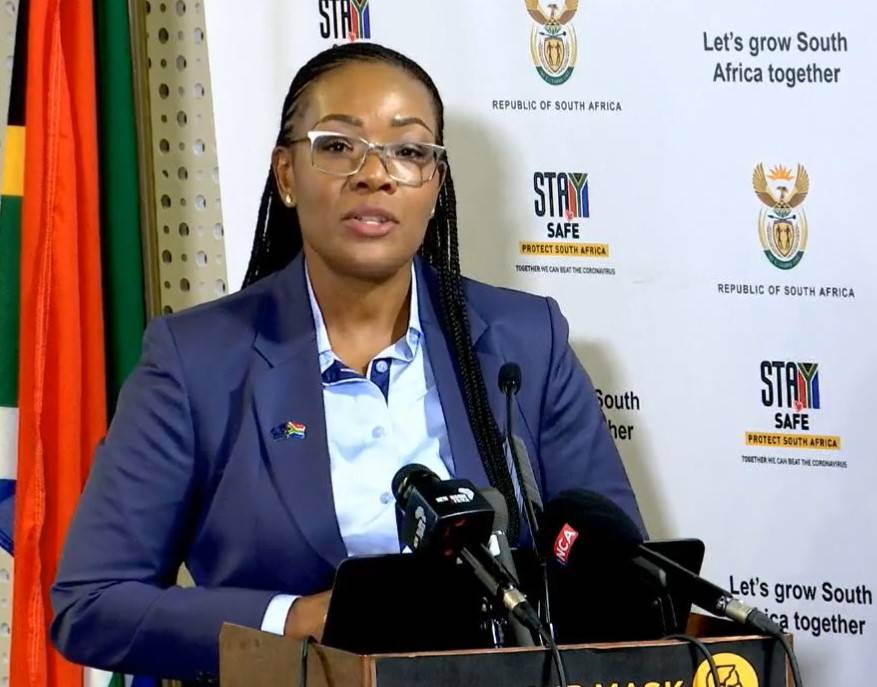
The past few days have been filled with loud silence in Free State despite Tsakane Maluleke, Auditor General of South Africa’s report that none of all municipalities got a clean audit.
The Auditor General of South Africa asked both MECs of Treasury and COGTA to intensify interventions to support and strengthen the capacity of municipalities.
This followed AG’s report in which none of the Free State municipalities received clean audits for the fifth consecutive year.
“The audit outcomes of the province regressed over the term of the previous administration. During the five years, the province did not achieve any clean audits.”
Maluleke blamed the mess in municipalities on the inaction of political and administrative leadership.
“Inaction by political and administrative leadership continued to be a deliberate obstruction to municipalities’ effective functioning.
The provincial leadership should be very concerned about this state of affairs.”
Maluleke claimed Municipalities did not have the discipline to submit their financial statements by the legislated date.
“In 2020-21, only 52% of municipalities submitted their financial statements on time, compared to 80% in 2016-17. By the date of this report, the audits of seven municipalities had not been completed as a result of the late or non-submission of financial statements. We escalated the non-submission to the relevant councils and the provincial leadership, but their response was ineffective.”
Poor financial management disciplines and in-year financial reporting processes meant that none of the municipalities could prepare credible financial statements in 2020-21. They continued outsourcing their responsibility by appointing consultants after year-end to prepare the financial statements and to construct and correct the underlying information. A total of R254 million had been spent on consultants from 2016-17.
Municipalities have gone backward in meeting project deadlines for infrastructure projects. In 2016-17, only 10% did not meet project deadlines, but this had increased to 60% in 2020-21.
For example, at Metsimaholo, the project for installing 4 000 sewer
connections was delayed by almost two years due
to poor planning. During the project, additional houses needing sewer connections were also identified and additional time was needed for repairs.
Most municipalities struggled to perform preventative maintenance and safeguard their infrastructure assets, because they spent only 1% of their infrastructure value on repairs and maintenance, compared to the norm of 8%. Repairs were only done after assets had broken down.
For example, a wastewater treatment plant that was earmarked to be decommissioned in Moqhaka continued to be used while design challenges on the new plant were being addressed. Due to the lack of maintenance over several years, the plant was not functioning effectively, resulting in sewage spillage that contaminated the Vals River.
On why Maluti-A-Phofung is full of the sewers the answer was found in the report.
“We performed additional audit work on the infrastructure and payment profiles of Masilonyana, Maluti-A-Phofung, and Tokologo. We determined that only Masilonyana had a plan and budget for the routine maintenance of infrastructure assets, while Maluti-A-Phofung and Tokologo had no plan to ensure that their infrastructure assets were properly maintained.
The municipalities were not fulfilling their service delivery mandates.
For example, all seven wastewater treatment works at Maluti-A-Phofung collapsed and the plants were not operational due to a combination of poor management, theft, and vandalism. This resulted in raw sewage being discharged into the environment.
We issued notifications of material irregularities for four of these plants due to the likely substantial harm to the MFMA 2020-21 Consolidated general report on local government audit outcomes SECTION 04 64 public. In addition, our data analytics revealed that these municipalities were exposed to the risk of not being able to detect fraudulent activities because they did not use unique identifiers for transactions in the bank statements and the general ledger.”
With Mangaung Metro now under the national government following the failure by the Province to implement a recovery plan, Auditor General explains how the National Treasury contributed to the lack of service delivery by withholding conditional grant funding of over R400 million meant for service delivery.
“On 1 January 2020, the provincial executive intervened at Mangaung by imposing and assuming responsibility for, a recovery plan that aimed to secure the metro’s ability to provide basic services and meet its financial commitments.
The National Treasury withheld conditional grant funding of R429,02 million due to underspending that resulted from delays in completing grant-funded projects.
This placed further strain on the metro’s financial health and also harmed service delivery. The metro spent less than 2% of its infrastructure budget on repairs and maintenance, resulting in infrastructures such as roads and water networks further deteriorating. Service delivery protests increased as residents grew increasingly dissatisfied with pothole-riddled roads, having to go for days without water, and refuse sometimes not being collected for weeks.
Although the metro held public participation sessions where the needs of the community were received and planned for, many of the planned targets were not achieved because they were not prioritized and/or because of a lack of funding.
Since projects were not completed, the communities’ needs were not addressed, which negatively affected their lives.
We continued to identify and report material findings on compliance with legislation at all auditees, including in the area of procurement and contract management.”
Concerning the irregular expenditure, AG says it has increased from R7 billion to R9 billion.
“Irregular expenditure remained high – the closing balance increased from R7,63 billion to R9,18 billion because the municipal public accounts committees did not perform timeous investigations.
The lack of consequences has created a culture of impunity and a complete disregard for the rule of law at all levels of municipal officials. In a province where there is such a dire need for service delivery, continued waste, disregard for legislation and a lack of consequences are unacceptable.
Every rand spent is a precious resource that should be used wisely.”
The Interim Provincial Committee is yet to pronounce its position especially the deployment committee that is tasked with ensuring qualified and suitable people with skills and expertise are placed in technical positions.
Instead of fixing the municipality, they are focusing on who should lead the same thing former president Thabo Mbeki warned them against.
It leaves questions around what EXCO discuss every week if governance is in the pits but what do you expect when provincial departments have acting HoDs.
The fact that none of the municipalities received a clean audit is telling and even under Ace Magashule, the municipalities were not this awful.
MECs Dukwana and Brown did not respond to our questions.
If you have any news or tips please send us an email at news@stepupsanews.co.za or WhatsApp at 0685000246
More Stories
A company with links to Patrick Phuti gets R97 million tender
“Cde Thabo is out of line” – Setai to Motsoeneneng
Women shot dead a few kilometres from Men’s Indaba venue