


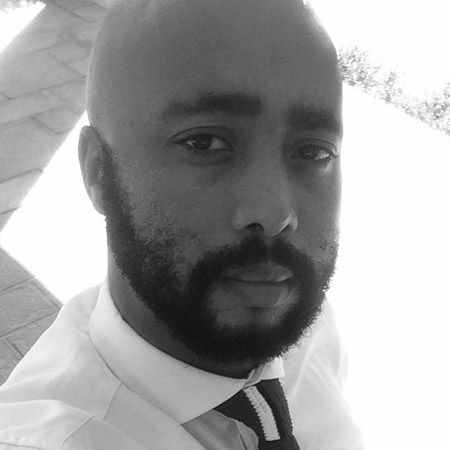
The issue of despicable joke posted by Tshediso Mangope has dominated public discourse, particularly in the Free State. It is an issue whose central content sparks an important debate which appears to be elusive and ignored by those who dared express their opinion on the matter. At face value, Tshediso’s regrettable joke demeans SADTU members. What do SADTU members represent in our society? What led to this perception discerned by this loathsome joke? Instead of simply hurling insults at Tshediso Mangope, some of these questions boggles my mind.
Firstly, Tshediso Mangope owes his intellectual prowess to the teachers who mostly belonged to SADTU. His understanding of how society functions and the challenges that confronted his upbringing was illuminated by the teachings of these SADTU members. It is on the bases of that understanding that he became a Marxist-Leninist. Why does he perceive SADTU members in a demeaning manner as projected by his joke? As a Marxist-Leninist, I take a blame for not assisting the young ones to understand our society deeply from our world outlook; a move from understanding classics to customising that to our own conditions.
Secondly, SADTU members are mostly found in the townships, they are mostly found in areas of squalor. It is natural for those teachers working under such conditions to belong to SADTU because it is a trade union influenced by Marxist-leninist theories. It is a trade union that understand that one is a member of society before being a teacher, it believes that it is not only struggles for better working conditions that will make teachers better but the transformation of socio-economic conditions of society that will better such conditions. These are the conditions that will make SADTU members to be ‘eating magwenya and archaar’.
Conditions under which these SADTU members are working are extremely difficult. These are the people who are almost the vanguards of the struggles for social transformation: They are the social workers, psychologists (social, school, education, clinical, etc), nurses, religious leaders, role models, and, most of all, ‘Parents to our kids from 7am- 3pm’. They bear the brunt of socio-economic conditions that communities in informal settlements and squalor areas are confronted with. They are the first to mobilise for the school uniform for kids that coming to school with torn clothes, they are the first people to diagnose the kids who are facing abuse. They feel pain when they see intelligent kids passing matric without IDs because they are told that they are foreigners. They navigate all those conditions to try to turn a ‘hopeless’ child into a meaningful individual in society, as they did with Tshediso Mangope.
Thirdly, it is at the schools where these SADTU members are working that communities are trying to make ends meet. They produce magwenya and archaar to sell in these schools in order to eke out a living. It is that income of magwenya and archaar that was made through selling to those teachers and learners who can afford that took Tshediso through his education. It is that money that assist a lot of families to survive. If teachers bring food from home or buy KFCs and Nandos they deprive these families of necessary income. If they chase away these ladies who sell these products at the schools, they will be part of instruments that are meant to impoverish Africans.
I am, therefore, appealing to SADTU leadership and members, in general, to understand that the problem of colonisation of the minds of the members of society goes deep, and this is a clear reflection of that. I appeal to SADTU to accept the apology of comrade Tshediso Mangope and further engage him on what his contribution can be in dealing with these challenges that confront SADTU members. We should not destroy our young intellectuals but never tire to decolonise their minds and thinking. I, personally, appreciate this matter to be raised because it reflects what is in the minds of many black professionals and the middle class. It is unfortunate for Tshediso Mangope that he became the outlet of that perception. SADTU must chastise all professionals, including leaders, from the townships for impliedly expressing this perception by taking their kids to suburb schools and investing their resources in those schools.
I thought the department of Education in the Free State would take this matter seriously and begin to understand the conditions under which these teachers are working. It is an indictment on the part of the department that these conditions continue to confront township teachers and there is no award for such a service rendered. The department assist suburb schools with services that township schools struggle to get. I request SADTU to charge the department to establish offices in the townships that houses all necessary services that are rendered by teachers due to socio-economic conditions of those communities, eg Psychologists, social workers, sports, etc.
Let us forgive Tshediso Mangope, let us thank him for revealing negative perceptions about township teachers that we know we harbour but only express them in action by ensuring that we take our kids to suburbs. We also contribute money to these schools in many ways, including through Woolworths card services (MySchool), ruffles, etc. Let us plough back.
Oupa Khoabane is the spokesperson of the Free State Interim Provincial Committee. He writes in his personal capacity



More Stories
OPINION: Ace Magashule graduates driving the ANC train worse than he did in the Free State
OPINION: Premier and HoD have earned punitive sanctions of direct imprisonment
My Brother My Keeper Moeketsi ‘Kakapa’ Selemela